Vancouver Writers' Festival
This project aimed to elevate the Vancouver Writers Festival (VWF) experience by exploring how the lull between events could become a low-barrier, dynamic opportunity for solo attendees to connect.
Workshop Methodology + Rationale
Firstly, I identified key questions to anchor the process: How do people feel and act during a lull? What does a “lull” mean to them? What does a “meaningful connection” look like in this context? These questions helped shape a method sequence that could surface authentic insight, drawing from IDEO’s Design Kit to balance reflection, observation, and co-creation.
Workshop: Visual Card Sorting
I began with a visual card-sorting exercise to frame the workshop, encouraging participants to use imagery to reflect on and creatively express how they define a lull. This method helped us to identify what participants value during moments of downtime within their daily lives. I wanted to understand their underlying goals and motivations outside the festival context, grounding our work in what genuinely matters to them before narrowing into the event setting.

Participants often chose the same or similar images, allowing us to identify recurring themes such as boredom, rest, and anxiety.
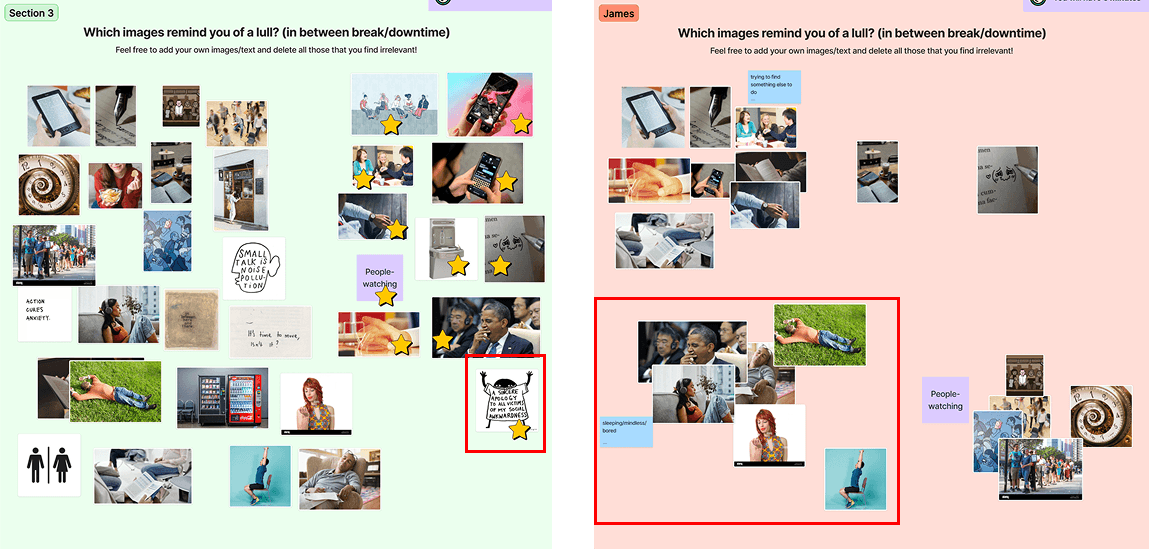
Some participants used stars to mark images they connected with the most, or grouped images into different categories.
Workshop: VWF Roleplay Scenario
Next, I situated the participants within the VWF environment by facilitating an attendee role-play scenario that recreated the pre-event waiting period. I chose this method as some of the most valuable insights often emerge when observing natural behaviours, especially those participants may not consciously notice or be able to articulate. Unlike interviews, which can prompt biased responses through leading questions, or socially desirable, “correct” answers, unobtrusive observation allowed us to capture genuine behaviours as much as possible.

A slide that imitated the waiting screen at a VWF event to situate participants.
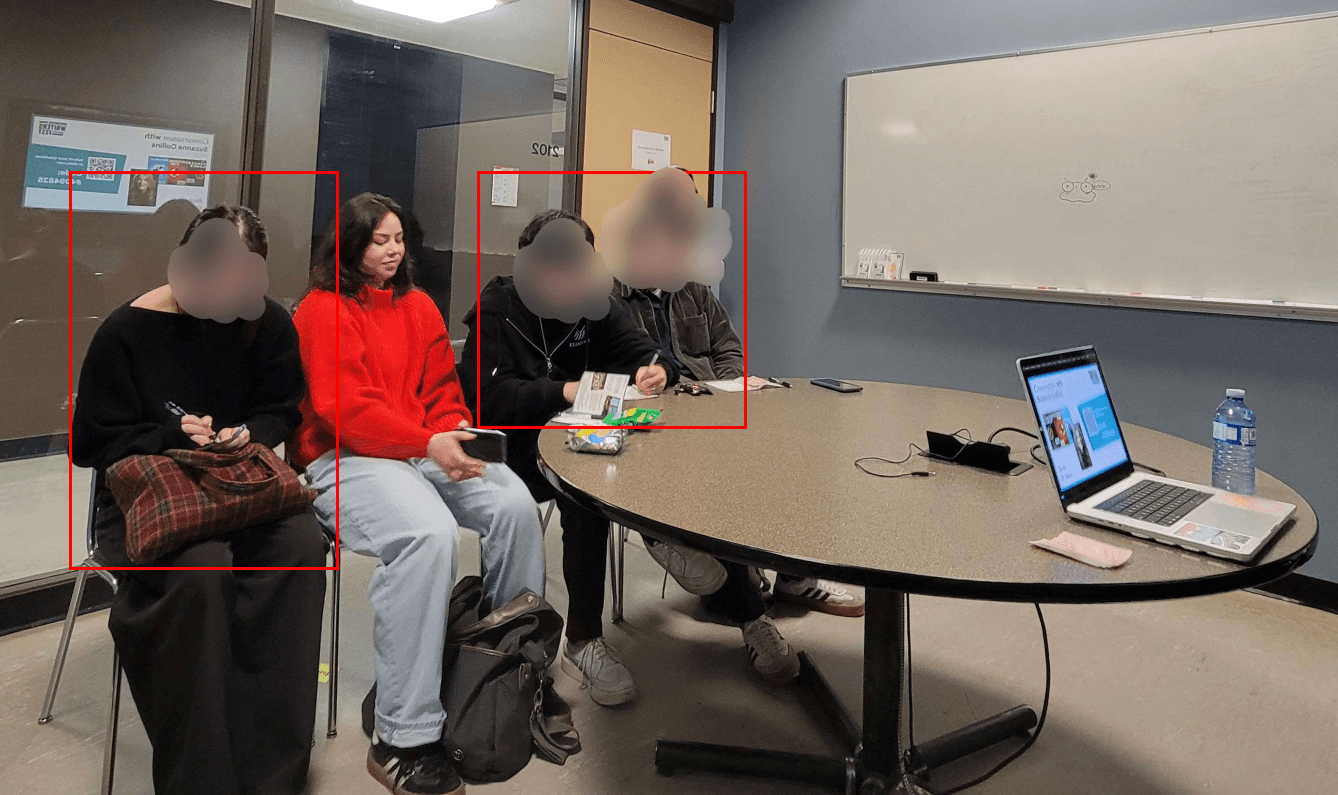
One participant was getting visually more awkward and began doodling by herself on the pamphlet, while two others started chatting.

Two participants started playing hangman on the paper pamphlet, which later prompted the first instances of personal conversation.
Workshop: Rose-Thorn-Bud Reflection + Co-Ideation
To uncover the reasoning and emotions behind those behaviours, I followed with a Rose-Thorn-Bud reflection. Participants identified what felt positive, uncomfortable, or areas of opportunity during the role-play. I then probed their responses further using the 5 Whys, getting beyond these surface-level insights and digging deeper into the motivations, assumptions, and needs that underpinned their actions. Finally, we ended with co-ideation, using “buds” participants surfaced to collaboratively generate opportunities for improvement.

An overview of how I sectioned out our board to categorise different thoughts, emotions, actions and ideas
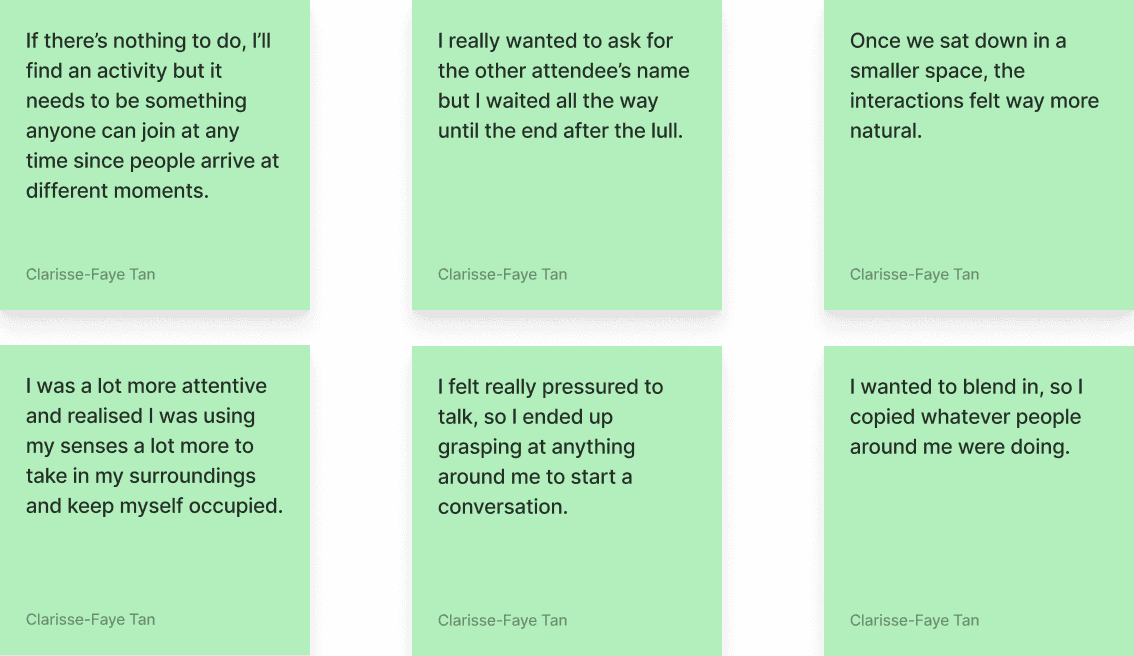
A selection of participant post-it reflections that I extracted and digitised, capturing key emotions and the motivations behind their actions.
Synthesising Workshop Insights
After the workshop, I led my team in synthesising our observations into three key findings:
Timing and space heavily influence how people experience a lull: Participants interacted more while seated in the theatre, versus when milling around the lobby. The constrained setting heightened their awareness of others and created moments where they were more likely to seek out something to engage with, revealing a distinct moment of opportunity.
Low-effort, flexible activities make interaction more approachable: Participants naturally turned to small activities like doodling or playing hangman, creating moments for conversation without requiring a formal social invitation. Activities worked best when they were flexible, and people could join or leave at any point.
Shared resources can become unexpected social touchpoints: Simple materials we provided, along with food and concession spaces, created opportunities for interaction by giving participants something to engage with together rather than requiring conversation to begin from scratch.
Grounded in direct ethnographic observation, my findings became the foundation for our design explorations and shaped the direction of our final intervention.
Sparking Conversation, One Heart at a Time
The Conversation Heart Bookmark was our final design intervention for VWF - a low-barrier, meaningful medium to encourage conversation between solo attendees during lulls at festival events.

The Conversation Heart Bookmark, displayed in its different forms.
Attendees can fold, personalise, and swap bookmarks while seated in the theatre waiting for an event to begin, choosing various aspects of the bookmark as a way to easily connect with like-minded individuals and create a lasting memory. By transforming idle moments into opportunities for engagement, this intervention helps enliven the often quiet, disconnected atmosphere before events, bringing it closer to VWF’s vision of a lively, curiosity-driven literary community enriched by personal connection.

Annotated, unfolded view of the Conversation Heart Bookmark.
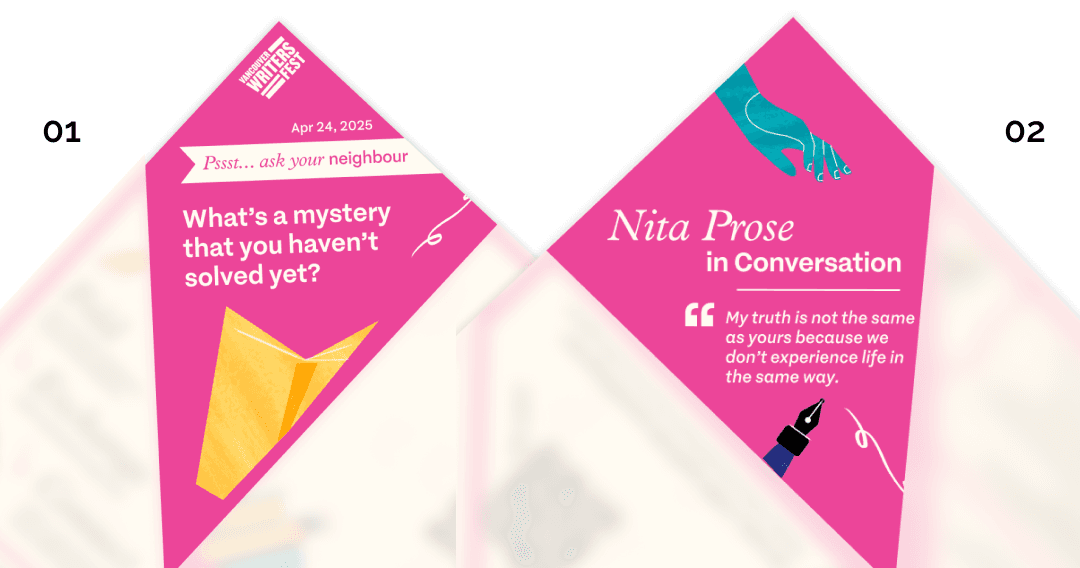
01 Themed Prompt
I chose a prompt as a conversation starter to spark event-specific discussion among like-minded solo attendees, preventing patrons from awkwardly searching for conversation topics.
02 Event Highlight
A quotation from the featured author to reflect the event theme, offering an incentive for loyal patrons to collect different keepsakes. This ensured interactions could be sustained but still unique across events.

03 Recommendation Area
This space invites attendees to share a piece of themselves in a thoughtful, personal way, sparking genuine conversation beyond the usual icebreaker that may evolve into a more long-term connection.

04 Sponsored Food Deals
This idea was sparked by how food became an easy medium for sharing and engagement during the workshop. Since attendees often spend time exploring Granville Island during the festival, the coupon encouraged solo attendees to explore together, creating shared experiences that could extend and strengthen connections beyond the event.

05 Folding Instructions
A QR code directs attendees to a tutorial, supporting a smooth folding experience.

06 Folding Guidelines
Numbered and colour-coded guidelines allow for an even more intuitive folding process.
Reflection
This project taught me the importance of grounding design decisions in real ethnographic data rather than assumptions about our audience. I had to step back, recognise where my understanding was incomplete, and return to the space to observe the people and behaviours I was designing for. It also reinforced that there is no universal user. Rather than stretching one imagined user to fit everyone, effective design comes from understanding the specific needs and context of the people I am designing for, and adapting the intervention accordingly.
The Intervention
The Conversation Heart Bookmark, a low-barrier, meaningful, physical medium to encourage conversation between solo attendees during lulls at festival events.
My Role
I designed and led a participatory workshop with readers who have/would potentially attend VWF events, using these insights to inform each aspect of our final design intervention.